
GAAR Grandfathering is Back: What Changes for Investors
Background
- India Income-tax laws introduced General Anti-Avoidance Rule (‘GAAR’) effective April 1, 2017 to curb tax avoidance practices (i.e. transactions that are lawful in form but abusive in substance) undertaken by taxpayers.
- Theoretically, GAAR refers to a set of provisions that empowers tax authorities to declare an arrangement as an ‘Impermissible Avoidance Arrangement (IAA)’ if its main purpose is to obtain a tax benefit and satisfies certain tainted element tests viz:
1. Creation of rights or obligations (not ordinarily implemented) between persons dealing at arm’s length;
2. Results, directly or indirectly, in misuse or abuse of the provisions of the Act;
3. Lacks commercial substance or is deemed to be deficient in commercial substance in whole or in part; or
4. Is entered or carried out in a manner not ordinarily employed for bona fide purposes
The introduction of GAAR created issues w.r.t. taxability for investors who made investment during the pre-GAAR era but transferred those investments post April 1, 2017. To address the concerns of such investors and recognising that such transactions could potentially fall within the scope of GAAR, grandfathering provisions were introduced.
- The corresponding Rule 128 of the India Income-tax Rules, 2026 provides for exclusion w.r.t investments made prior to April 1, 2017 from applicability of GAAR.
The bare text of the relevant provisions before any amendments is as follows
128 - Chapter XI relating to General Anti Avoidance Rule not to apply in certain cases.
The provisions of Chapter X-A shall not apply to—
(d) any income accruing or arising to, or deemed to accrue or arise to, or received or deemed to be received by, any person from transfer of such investments made before the 1st April, 2017 by such person
Despite the above grandfathering provision, Indian Revenue Authorities are prone to tax transactions where investments are made prior to April 1, 2017 considering Rule 128(2).
Relevant Extract of Rule 128(2) is as follows:
128 - Chapter XI relating to General Anti Avoidance Rule not to apply in certain cases.
………………….
(2) Without prejudice to the provisions of sub-rule (1)(d), the provisions of Chapter XI shall apply to any arrangement, irrespective of the date on which it has been entered into, in respect of the tax benefit obtained from the arrangement on or after the 1st April, 2017”
- In a nutshell, while Rule 128(1) enumerates four categories of exclusions from GAAR, with clause (d) specially excluding investments made prior to April 1, 2017, Rule 128(2) specifies the circumstances in which GAAR would apply even to arrangements linked to pre-2017 investments.
- This may seem to make Rule 1(d) redundant, however, there is more to the above discussion than just plain reading of the law.
Interplay between GAAR and Grandfathering Provisions
A. Tiger Global Judgment –
- The above aspects w.r.t. grandfathering were discussed by the Hon’ble Supreme Court (‘SC’) in the case of Tiger Global International II, III and IV Holdings, Mauritius (‘Tiger Global’). Tiger Global invested in Flipkart Singapore (which derived its value substantially from Indian assets) prior to April 1, 2017 and took exit in 2018, claiming exemption on the grandfathered capital gains. Tax authorities argued that the structure was created mainly to avoid tax, thereby rejecting TRC and invoking GAAR. While the High Court granted relief, the Apex Court highlighted the following principles:
- TRC constitutes only prima-facie evidence of residence - TRC cannot override the principle of ‘substance over form’. TRC by itself cannot preclude a detailed tax inquiry into actual control and management where intermediary entities have been interposed primarily to avoid tax and facts indicate treaty abuse.
- Holding structures must demonstrate genuine, non-tax commercial purposes - factors like the 'head and brain’ test (i.e., where control and management truly lie) will be rigorously examined and are central to examining genuineness of residence and the bona fides of the transaction.
- Circulars do not override statutory amendments - Tax administration circulars though binding on the Revenue at the time of their issuance, operate only within the legal regime in which they were issued and cannot override subsequent statutory amendments.
- GAAR overrides Tax Treaty benefit - Benefit of tax treaties are extended only to bonafide transactions and not to arrangements structured solely for obtaining tax advantages. Once an arrangement is found impermissible, treaty exemption is unavailable. Indian GAAR can be invoked to impermissible arrangements yielding tax benefits on or after April 1, 2017, irrespective that the capital asset was acquired prior to this cut-off date. Use of GAAR is central and not peripheral – it is intended to operate as a supervening layer of scrutiny, capable of overriding tax treaty benefits where an arrangement/ transaction lacks substance.
- Tax Sovereignty - Taxing an income arising out of its own country is an inherent sovereign right of India. Tax Treaty is anti-double tax, not non-tax tool.
- GAAR vs JAAR - Even if GAAR is not applicable, Judicial Anti-Avoidance Rule (‘JAAR’) continues to apply in parallel and empowers Indian authorities to deny treaty benefits in cases involving treaty abuse or conduit structures based on ‘substance over form’ approach. Thus, GAAR and JAAR can be invoked together or separately i.e., they are not mutually exclusive.
B. CBDT Notifications 54 and 55 and Analysis
Post the judgment - recent notifications explicitly amending Rule 128(2) and clause (d) of Rule 128(1) have introduced a critical change.
Relevant Extract of Notification 55 is provided below:
128 - Chapter XI relating to General Anti Avoidance Rule not to apply in certain cases
(1) The provisions of Chapter XI shall not apply to—
………………
(d) any income accruing or arising to, or deemed to accrue or arise to, or received or deemed to be received by, any person from transfer of such investments which were made before the 1st April, 2017 by such person.
(2) The provisions of Chapter XI shall apply to any arrangement, irrespective of the date on which it has been entered into, in respect of the tax benefit obtained from the arrangement on or after the 1st April, 2017, except for that income which accrues or arises to, or deemed to accrue or arise to, or is received or deemed to be received by, any person from transfer of such investments which were made before the 1st April, 2017 by such person.”
Amendment to 128(1)(d)
- In our view, the deliberate insertion of the words ‘such investments which were made by such person’ in the amended Rule 128(1)(d) makes it clear that the grandfathering protection is strictly related to only investments made prior to April 1, 2017.
- This, in our view, adds further clarity that the entire arrangement is not protected and just those shares out of the whole set which are acquired prior to cut-off date.
Amendment to 128(2)
- The phrase ‘Without prejudice to the provisions of clause (d) of sub-rule (1)’ in Rule 128(2) has been removed and replaced with a clear exclusionary provision. This amendment explicitly excludes the applicability of GAAR to capital gains income arising from investments made prior to before April 1, 2017.
What remains?
- CBDT amendment notification cannot override JAAR - As highlighted in the SC ruling Tiger Global (Supra), even if grandfathering amendments shield pre-2017 investments from ‘statutory GAAR’, JAAR can operate ‘independently’ and ‘in parallel’ with GAAR. JAAR are invoked to pierce the structure and deny treaty benefits where the transaction lacks genuine commercial substance.
Taxpayers who exited pre-2017 investments between April 2017 and 31 March 2026 and are facing GAAR challenges may not get direct relief from these amendments - however, in the absence of any clarification as to whether the amendments are ‘clarificatory’ rather than ‘substantive’, an argument may be taken that these are retrospective.
Illustrations
Let us understand the above discussion in detail through different illustrations.
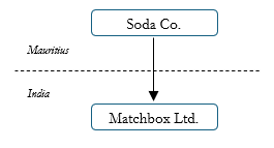
Illustration 1 – Soda Co., a Mauritius company, invested in 1,000 shares of Matchbox Ltd., a Singapore-based company, in January 2015.
Scenario | GAAR Applicability | Particulars |
|---|---|---|
Scenario 1 – Soda Co. sold all the investments in March 2025 to Fries Co [Before Tiger Global]
| From Taxpayer’s perspective – No [under Rule 10U(1)(d)/ present Rule 128(1)(d)] From Tax Department’s perspective – Yes [under Rule 10U(2) / present Rule 128(2)] | In the instant case, income earned by Soda Co. from transfer of shares of Matchbox Co., which were originally acquired in January 2015, should ideally be safeguarded from the applicability of GAAR by virtue of Rule 128(1)(d). Mostly the issue which reached Courts before Tiger Global was w.r.t. validity and sufficiency of TRC, rather than applicability of GAAR. |
| Scenario 2 – Soda Co. sold all the investments in Jan 2026 to Fries Co. [Post Tiger Global] | Amongst other issues that were discussed in Tiger Global, the Apex Court held that GAAR can override treaty benefits, even where the investment was grandfathered if the arrangement is for tax avoidance. It held as follows:
Thus, where a transaction is found to be an impermissible avoidance arrangement, Rule 128(2) operates to attract GAAR regardless of whether the underlying investment or structure originated prior to that date i.e., Rule 128(2) is likely to dilute 128(1)(d) to the extent that the arrangement is impermissible.
This interpretation has expanded Tax Department’s ability to challenge transactions which were made before GAAR came into existence. As a result, a pre-2017 investment, when exited after April 1, 2017, becomes vulnerable to GAAR, potentially rendering the gains taxable in India. Therefore, the critical determinant, is not the date of investment but the nature of transactions – whether tax avoidance is triggered. Accordingly, it is also necessary to examine whether the transactions possess adequate commercial substance.
| |
| Scenario 3 – Soda Co. sold all the investments which were acquired prior to April 1, 2017 to Fries Co. in April 2026 [Post Amendment] | No | Income arising to Soda Co. post amendment should ideally not be taxed in India since Rule 128(2) explicitly provides exception to income arising on transfer of investments made prior to April 2017. Here, it may be noted that as all the investments made prior to April 2017 have been protected, one may argue that irrespective of the fact whether the investment resulted in impermissible avoidance arrangement, the same cannot be brought within the ambit of GAAR.
In essence, Rule 128(2), now provides a clear carve-out from the applicability of GAAR wherein only investors can claim benefit of grandfathering provisions.
However, since JAAR continues to apply to ‘pre-2017’ investment, taxpayers can still be denied treaty benefits. |
Conclusion
CBDT amendment is a welcome course correction by the Government which intends to safeguard grandfathering for pre-2017 investments. However, JAAR and substance-based scrutiny remain fully operative. Accordingly, this does not constitute a blanket dilution of India's anti-avoidance framework.
Further, these amendment notifications do not provide any specific clarification or explicit wording on the treatment of mixed pools of investments comprising both pre- and post-GAAR acquisitions. Accordingly, one could argue that pre-April 2017 investments continue to remain protected from GAAR, with only post-April 2017 investments being potentially subject to its provisions. However, this view may give rise to practical difficulties in situations where the investment structure is identical, yet one set of investments enjoys protection while the other does not — creating an anomalous and potentially unworkable outcome.
Road Ahead for Overseas Investors with Investments in India -
W.r.t. Mauritius specifically, the Tax treaty grandfathers certain investments and even contains tax-avoidance measure in the form of Limitation of Benefits (‘LoB’). Yet even where a company satisfies LoB, invoking GAAR seems to completely undermine the 2016 Protocol to the DTAA.
Going forward below are the key concerns that overseas investors should carefully evaluate while making investment decisions in India.
- Mechanical treaty benefits claim based solely on TRCs in the absence of commercial substance and business purpose are likely to face heightened tax scrutiny in India.
- Private Equity, Venture Capital investors, FPIs, and Offshore holding structures should proactively revisit the legacy structures and analyse eligibility to avail Tax Treaty benefits.
- Ensure real economic substance by evaluating decision making matrix and sound commercial rationale in treaty jurisdictions.
- Grandfathering and Treaty protection are not blanket shields - commercial substance and real & effective control will matter more than ever. GAAR may be invoked even under cases of grandfathered investments.
- The ruling strengthens the Indian Tax Administration ability to look at the entire investment lifecycle.
By clarifying the legal position on overseas investments and regulatory oversight, the Apex Court has primarily focused on global investors operating in India; that their investment and capital structure must align with domestic Income-tax laws and GAAR. The judgment is likely to have far-reaching implications, not only for Tiger Global but also for foreign investment funds at large. While the CBDT amendment has provided needed relief, but the road ahead is not concrete.
________________
- ^ ‘tax benefit’ includes,— (a) a reduction or avoidance or deferral of tax or other amount payable under this Act; or (b) an increase in a refund of tax or other amount under this Act; or (c) a reduction or avoidance or deferral of tax or other amount that would be payable under this Act, as a result of a tax treaty; or (d) an increase in a refund of tax or other amount under this Act as a result of a tax treaty; or (e) a reduction in total income; or (f) an increase in loss, in the relevant previous year or any other previous year;
- ^ Rule 10U of Income-tax Rules, 1962
- ^Rule 10U(2) of Income-tax Rules, 1962
- ^Authority for Advance Rulings (Income-tax) v. Tiger Global International II Holdings [2026] 182 taxmann.com 375 (SC)
- ^[Notification No. 55/2026/F. No. 370142/15/2026-TPL] and [Notification No. 54/2026/F. No.370142/15/2026-TPL] dated March 31, 2026
^ Notification 54 makes the same amendments in Rule 10U of Income tax Rules 1962
Published with permission of Harshit Mehta, Pragya Bansal & Roshini Chaurasia
Related content